
Black Friday 2026 Data Playbook (1/4). This is the overview. The next three posts go deeper: Three Traffic Waves, Three Real-Time Data Feeds, and Your Listing in the Alexa for Shopping Era.
Black Friday is November 27, 2026. Cyber Monday is November 30. Today is October 29, so there are 29 days left.
Most sellers are doing the same things right now: checking inventory, submitting deals, setting budgets. All of that is necessary, but it answers “what did I prepare?” The question that separates sellers during the event is a different one: once it starts, how fast can you see what changed, and how fast can you respond?
Last year: records are now the baseline
Adobe’s 2025 U.S. online numbers:
- Cyber Monday: $14.25 billion, up 7.1% year over year, the biggest single online day of the year.
- Black Friday: a record $11.8 billion, up 9.1%.
- Cyber Week (Thanksgiving through Cyber Monday): $44.2 billion, up 7.7%.
- On Cyber Monday, mobile drove 57.5% of sales, and three categories (electronics, apparel, furniture) made up 57% of online spend.
- The full holiday season (Nov 1 to Dec 31) reached about $257.8 billion, up 6.8%.
Two more numbers worth keeping in mind:
- Adweek, citing Adobe, reported that AI-driven traffic to retail sites rose 805% year over year on Black Friday 2025.
- Salesforce estimated that AI and agents influenced 20% of global Cyber Week orders, and 17% in the U.S. (about $13.5 billion).
This year: what outside analysts expect
| Metric | 2025 actual (Adobe) | 2026 forecast (Adobe) |
|---|---|---|
| Holiday season online spend (Nov 1–Dec 31) | ~$257.8B | $275.1B, +6.7% |
| Cyber Monday | $14.25B | $15.1B, +6.2% (first $15B+ day) |
| Black Friday | $11.8B | $12.9B, +9.2% (growing faster than Cyber Monday) |
| Thanksgiving | $6.4B | $6.9B, +8.5% |
| October online spend | n/a | $95.8B, +8% |
| AI traffic growth | n/a | +130% (Thanksgiving +159%, Black Friday +95%, Cyber Monday +88%) |
October already gave us a preview. Adobe reported $9.86 billion in U.S. online spend during Prime Big Deal Days (October 6–7), up 8.5%. Electronics ran 85% above September’s average, toys 158%, and video games 90%.
Where the opportunity is
1. Growth won’t come from deeper discounts. PPC Land’s reading of Adobe’s forecast is that discounting will look much like last year’s. If everyone’s prices are similar, the edge goes to whoever notices a competitor’s move first and adjusts first.
2. The event is now three waves, not one day. October is the preview, Black Friday week is the main event, and Cyber Monday plus the tail is the cleanup. Adobe expects Black Friday (+9.2%) to grow faster than Cyber Monday (+6.2%), which suggests the peak is moving earlier. Each wave needs different data. Post 2 breaks that down.
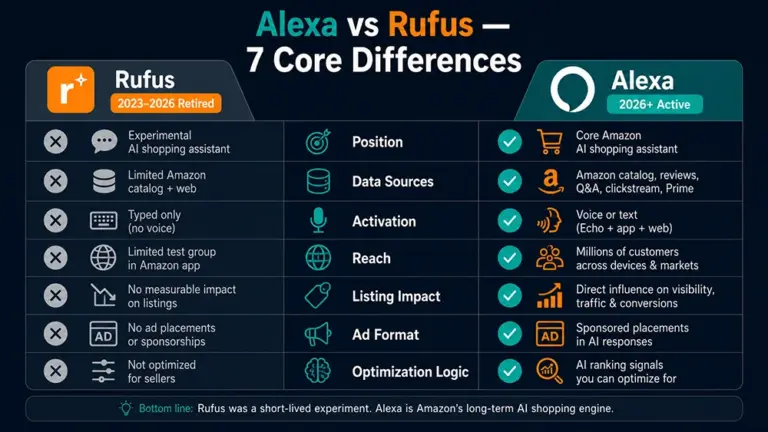
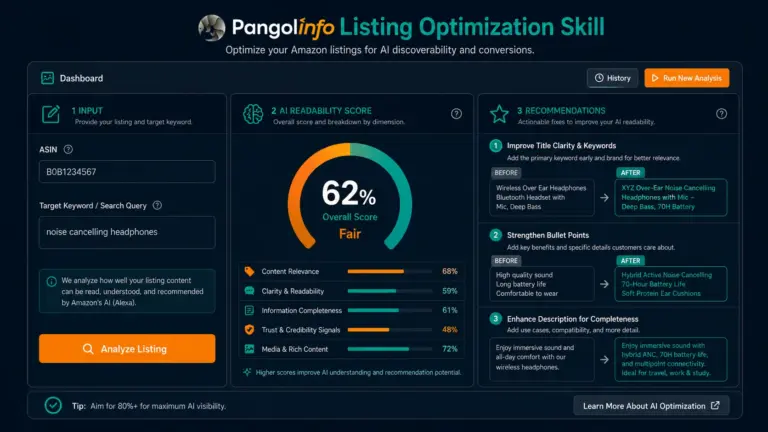
3. There’s a new traffic entrance: AI. In May 2026, Amazon replaced Rufus with Alexa for Shopping and put AI Q&A into the main search bar. With Adobe forecasting AI traffic to more than double, “Do I rank for this keyword?” now has a sibling question: “Does the AI recommend me?”
4. Ad costs are eating margin. A service provider’s estimate puts the 2025 average Amazon CPC around $1.12, rising to $1.35–$1.45 in Q4 peaks, and $2–$6+ in competitive categories during Black Friday and Cyber Monday (an estimate, not official data). Triple Whale’s sample of roughly 2,000 brands showed Amazon ad spend up 149% during Prime Big Deal Days versus the prior week, with returns concentrated on day one. The more you spend, the more it matters to know which spend is wasted.
The playbook: three waves × three data feeds
| Wave 1: Warm-up (now to ~Nov 19) | Wave 2: Black Friday week (expected ~Nov 19–29, unconfirmed) | Wave 3: Cyber Monday and after (Nov 30 to early Dec) | |
|---|---|---|---|
| Price feed | Competitor price bands and coupon baselines; check whether “list prices” are real | Take-home price, deal price, Buy Box, hijackers, stock | How fast prices recover; competitor stockouts |
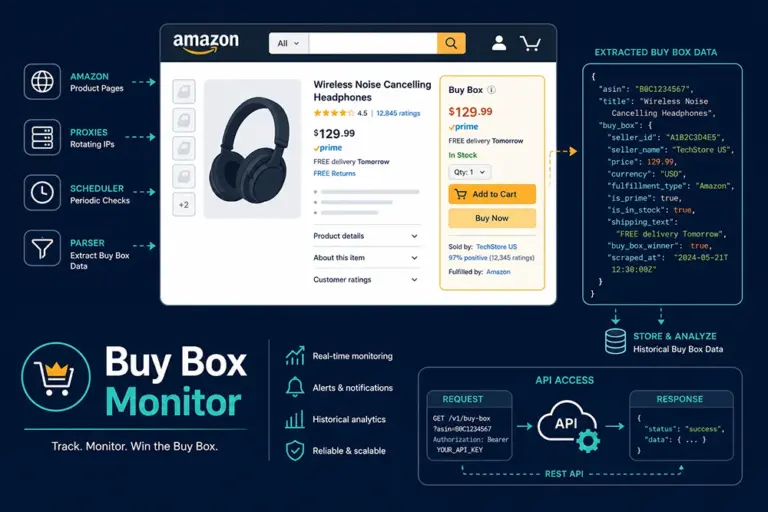
| Ad feed | Organic and sponsored baseline for gift and event keywords | SP/SB/video placements on core keywords, hourly, by zip code | Keyword-level share of voice; cut weak terms |
| AI feed | Build a baseline question set; record who gets recommended | Re-test daily; defend your place in the first screen | Study the AI’s stated reasons; rework the listing |
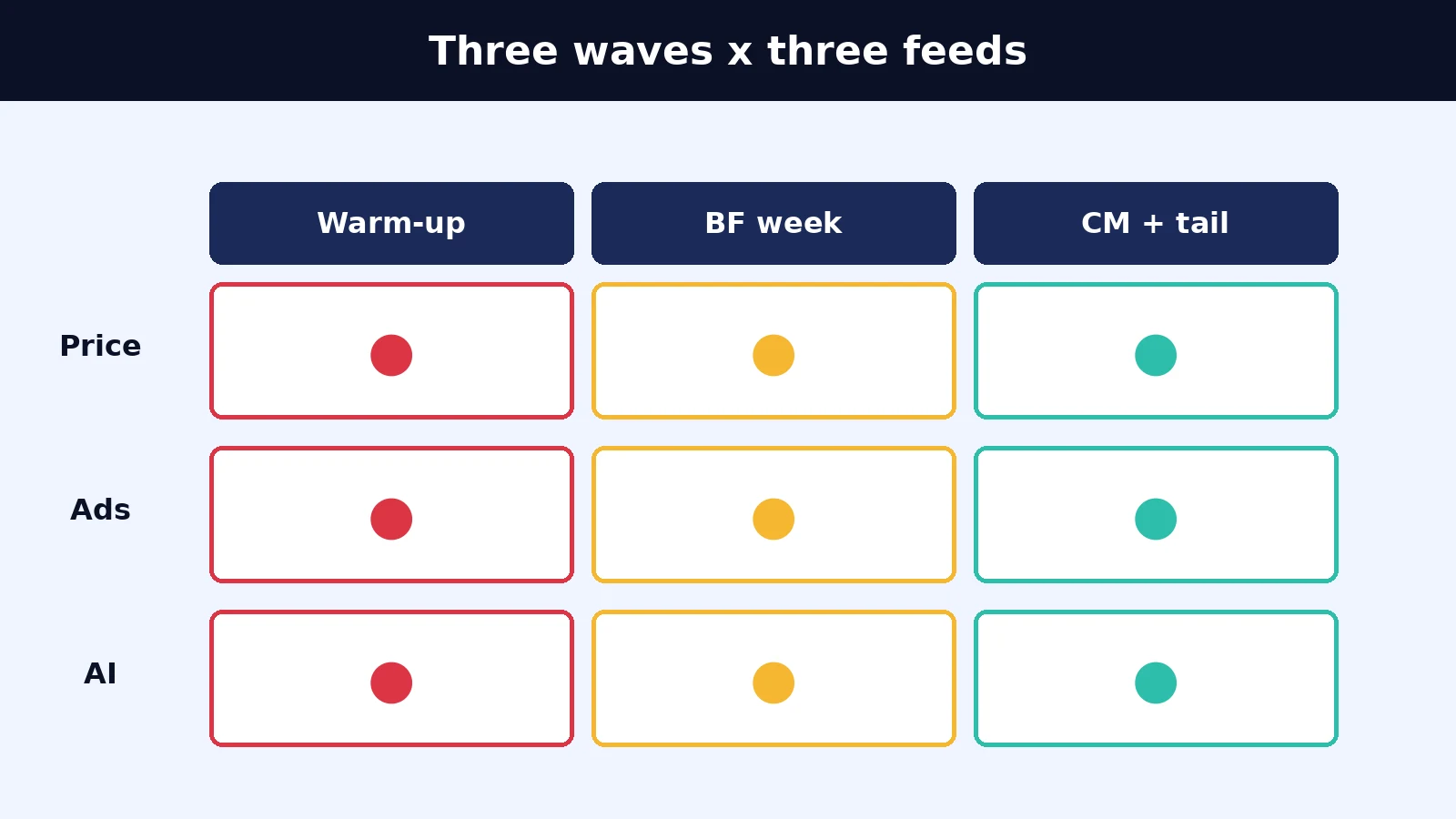
This table is the spine of the series. The next three posts each take one axis.
Countdown calendar
| Date | Item | Note |
|---|---|---|
| Oct 6–7 | Prime Big Deal Days (done) | Use it as a rehearsal dataset |
| ~Nov 9 | Listing freeze | A common seller practice, not an Amazon rule |
| Nov 13 | New deal-submission deadline (unverified) | Original deadline was Oct 20; one service provider reports an extension. Check Seller Central |
| ~Nov 19–21 | Black Friday week likely starts | Amazon hasn’t confirmed; last year it ran Nov 20–Dec 1 |
| Nov 26 | Thanksgiving | Adobe forecasts $6.9B online, with mobile at a record 63% |
| Nov 27 | Black Friday | $12.9B (forecast) |
| Nov 30 | Cyber Monday | $15.1B (forecast) |
One detail from PPC Land’s reporting: October event prices are excluded from the lookback Amazon uses to set Black Friday deal price ceilings, so a Prime Big Deal Days discount doesn’t automatically lower your maximum Black Friday deal price.
Three customers, three ways of using data
All cases come from the Pangolinfo case page and were shared with customer authorization.
1. A $2.2B footwear and apparel seller: build the data foundation for 30,000 SKUs first. With 30,000+ SKUs, this seller relied on experience for product selection, and third-party data couldn’t flow into its ERP. After adopting Pangolinfo, key fields (prices, BSR, reviews) were collected reliably, standardized JSON reached the ERP within two days, success rate stayed above 99%, and the selection cycle dropped to 8 hours. For Black Friday, a SKU-level data foundation like this is the precondition for every real-time decision after it.
2. A $1.8B GMV mother-and-baby seller: ad hijacking has to be caught within the hour. Competitors were taking over top ad spots on core keywords, traffic dropped without warning, and nationwide averages hid big differences between U.S. coasts. They built hourly competitor ad monitoring on Pangolinfo, split by zip code, with hundreds of long-tail keywords watched in parallel. The reported results: 10x better detection of competitors grabbing positions, average CPC down more than 38%, and daily ad spend down 60%.
3. Sif: 30M+ requests a day for a traffic-analytics platform. Sif gives thousands of sellers keyword ranking and traffic analysis, so ad-placement accuracy matters enormously. Pangolinfo supports 30M+ daily requests, a sponsored-product ad collection rate above 98%, and page-structure restoration accuracy above 99%. Sif’s CTO called Pangolinfo the strongest technical partner they’ve worked with on collection quality, concurrency, and configuration flexibility, and said they’ve fully switched over.
Start today
You don’t need to build a system on day one. Three steps are enough:
1. Sign up at tool.pangolinfo.com. No credit card, and 60 free Credits every month. 2. Test in the console. Enter your most important ASINs and a target zip code, and see what the storefront shows: price, ad placements, stock. 3. Pick one feed to launch first: price, ads, or AI. Start with the one that hurts most.
If your team already works with AI agents, you can connect through the Amazon Data MCP with a single configuration. To watch the AI entrance, see the Amazon Alexa API. Details are in the developer docs, and the collection capabilities are covered on the Amazon Scraper API page.
Series navigation
1. This post: the overview 2. Black Friday 2026 Is Three Traffic Waves, Not One Day 3. Stop Running Black Friday on Gut Feel: Three Real-Time Data Feeds 4. Your Listing Meets Alexa for Shopping: Ready for Its First Black Friday?
Sources and notes
- Adobe, 2025 Cyber Monday and Cyber Week results: Adobe, 2025 Cyber Monday and Cyber Week results
- Adobe, 2026 holiday forecast: Adobe, 2026 holiday forecast
- Digital Commerce 360, Prime Big Deal Days 2026: Digital Commerce 360, Prime Big Deal Days 2026
- Adweek, 2025 AI traffic: Adweek, 2025 AI traffic
- Chain Store Age, Salesforce 2025 Cyber Week: Chain Store Age, Salesforce 2025 Cyber Week
- PPC Land, forecast analysis and deal submissions: PPC Land, forecast analysis and deal submissions and and
- Triple Whale, Prime Big Deal Days 2026 benchmarks: Triple Whale, Prime Big Deal Days 2026 benchmarks
- CPC figures are estimates from the service provider SupplyKick and are indicative only.
Market data as of October 29, 2026. For exact Amazon event dates and submission deadlines, rely on Seller Central notices.