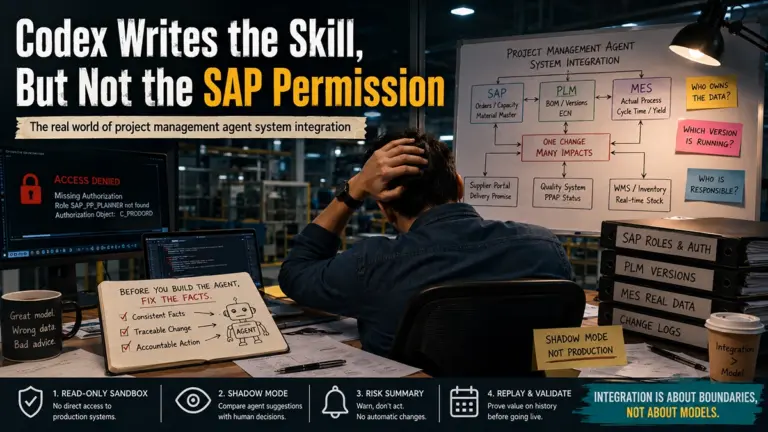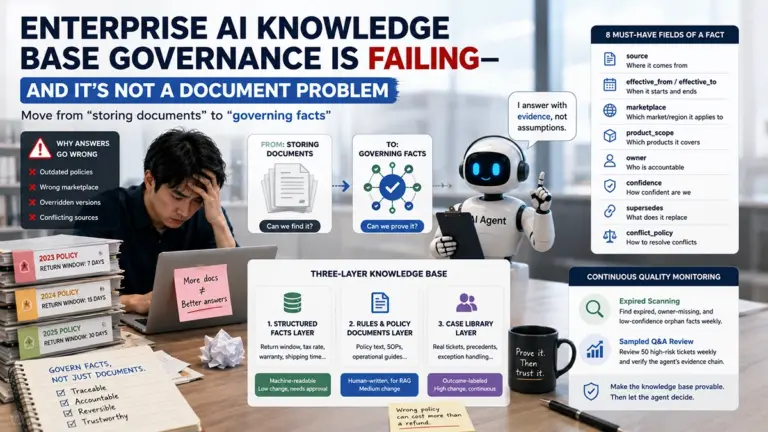

In 2026, successful Amazon AI Agent Automation shifts operators from manual spreadsheet compilation to strategic decision-making by connecting AI workspaces like Claude Code, Tencent WorkBuddy, Doubao, and Qwen directly to live storefront pipelines via the Model Context Protocol (MCP). Instead of exporting stale CSVs, agents autonomously execute conversion triage, competitor price tracking, compliance checks, and profit audits in real time.
Why Manual CSV Exports Break Amazon AI Agent Automation Workflows
Before 2025, most cross-border sellers treated AI as a conversational copywriter for drafting bullet points or translating customer service emails. By late 2026, the operational paradigm shifted from chat interfaces to autonomous task execution. Today, operators hand an entire local folder and a multi-step objective to desktop agents—whether Claude Code, OpenAI Codex, and Gemini in global workflows, or Tencent WorkBuddy, Doubao Work, and Qwen Agent in Asia-Pacific teams—expecting the agent to decompose the steps and deliver a finished audit.
Yet in our live tests at Pangolinfo across mid-to-large Amazon seller teams, most attempted e-commerce agent automation workflows stall at the exact same bottleneck: “spreadsheet purgatory”. An AI agent can reason across ten thousand rows of data in seconds, write Python scripts to clean SKU tables, and flag margin anomalies. However, if a human operator still has to log into Seller Central every morning at 8:30 AM, download Business Reports, export ad placement sheets, and manually scrape competitor coupons just to feed the prompt, the automation loop is fundamentally broken.
Relying on traditional third-party seller browser extensions or legacy databases introduces a second failure mode: T+1 data latency. Legacy software caches storefront snapshots every 24 to 72 hours and typically restricts keyword visibility to the first three search result pages. When a category rival drops a 20% clip coupon at 10:00 AM PST or hijacks your Buy Box during a lightning deal, T+1 cached databases leave your AI agent analyzing yesterday’s battlefield. Furthermore, following Amazon’s May 2026 upgrade of Rufus into the full-scale Alexa for Shopping generative engine, static keyword rank trackers miss conversational recommendation shifts entirely.
What Is the Real Cost of T+1 Latency in Daily Operations?
When human operators spend their mornings acting as human APIs—copying, pasting, and formatting CSV files for AI tools—they lose the cognitive bandwidth required for supply chain negotiation, product iteration, and capital allocation. True Amazon operations AI automation requires severing the manual export step. By wiring your agent directly to live storefront data via standardized protocols, the AI pulls exact real-time metrics on demand, leaving humans to approve or reject the final business decision.
How to Connect Claude to Live Amazon Data via Model Context Protocol (MCP)
To eliminate manual CSV uploads, your AI workspace needs a standardized bridge to query live Amazon product pages, search results, and category nodes on its own. If you have ever searched for how to connect Claude to live Amazon data without writing custom headless browser scripts or managing residential proxy pools, the Model Context Protocol (MCP) is the architectural standard built for this exact purpose.
Rather than building brittle Python scrapers that break whenever Amazon updates its DOM structure, teams deploy the Amazon Data MCP server. This zero-code server exposes 21 specialized tools directly to your AI agent, covering live ASIN detail extraction, keyword SERP parsing, Best Sellers Rank (BSR) node tracking, customer review retrieval, and intellectual property verification. Under the hood, Pangolinfo handles the anti-bot challenges, residential IP rotation, and ZIP-code localization across global marketplaces with a measured 99.9% request success rate.
Standard MCP Server JSON Configuration for Desktop Agents
Whether you run Claude Desktop, Cursor, or compatible agent workspaces like WorkBuddy, connecting the pipeline takes less than two minutes. You simply inject the standard server configuration into your local MCP settings file (such as claude_desktop_config.json) using your API credentials from the Pangolinfo Developer Docs:
{
  "mcpServers": {
    "pangolinfo": {
      "url": "https://mcp.pangolinfo.com/mcp",
      "headers": {
        "Authorization": "Bearer <YOUR_PANGOLINFO_API_KEY>"
      }
    }
  }
}
Once restarted, your agent immediately recognizes all 21 tools. If your team primarily operates inside Tencent’s agent environment and wants a step-by-step walkthrough of the skill ecosystem, refer to our dedicated WorkBuddy Amazon data skill setup guide rather than configuring raw JSON files from scratch.
6 High-ROI Scenarios for Amazon AI Agent Automation in Daily Operations
Amazon AI Agent Automation only pays off when a live data pipe maps to rigorous Standard Operating Procedures (SOPs). In our internal production environment and partner seller tests at Pangolinfo, we restructured daily store management around a clear division of labor: the AI agent executes 80% of the data gathering, cross-referencing, and anomaly flagging across six core operational scenarios, while human operators retain 100% authority over final pricing, inventory, and ad budget decisions.
Scenario 1: How Do You Automate Amazon Daily Sales and Conversion Drop Triage?
Every morning, an operator’s most urgent task is diagnosing sudden unit session percentage (conversion rate) drops on core ASINs. Manually, this requires opening the listing, checking if the Buy Box was lost, verifying delivery dates across US ZIP codes, scanning recent 1-star reviews on the first page, and searching top keywords to see if a competitor launched an aggressive promotion.
To automate Amazon daily sales and conversion drop triage, we instruct our agent (running in WorkBuddy or Claude) to read our local SKU priority sheet and invoke the MCP server automatically. The agent runs a four-point diagnostic for each ASIN:
- Listing Integrity & Buy Box Check: Verifies current Buy Box winner, seller ID, and prime delivery promise for ZIP codes 10001 (New York), 90001 (Los Angeles), and 60601 (Chicago).
- Front-Page Review Sentiment Shift: Pulls the top 10 displayed reviews sorted by “Most Recent” and “Top Reviews” to check if a newly upvoted 1-star review with video is sitting above the fold.
- Category BSR vs. Keyword Rank Divergence: Compares sub-category BSR movement against real-time organic rank on the ASIN’s top five traffic-driving search terms.
- Rival Promotional Interception: Scans the top 10 organic and sponsored rivals on the primary keyword to detect new badges (Limited Time Deal, Prime Exclusive Discount, or clip coupons).
Instead of spending 40 minutes clicking through tabs, the human operator receives a structured markdown brief at 8:45 AM: “ASIN B08XXXX conversion dropped 3.2% yesterday because Rival ASIN B09YYYY activated a 15% clip coupon on your #1 keyword ‘wireless carotid massager’, pushing their effective checkout price $4.50 below yours while your New York delivery window slipped from 1-day to 3-day.” The human simply decides whether to match the coupon or reallocate ad spend.
Scenario 2: Real-Time Competitor Price, Coupon, and Buy Box Monitoring
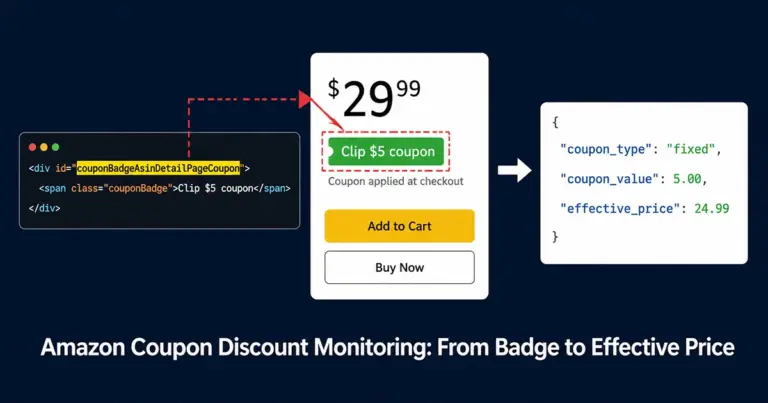
Standard price trackers only monitor the listed price_amount field, completely missing green clip-on coupons, “Save X% at checkout” promotions, or Buy Box suppression. In high-velocity categories like consumer electronics or home appliances, an undetected competitor coupon over a weekend can drain thousands of dollars in wasted PPC clicks.
For stores managing 500+ SKUs where lightweight MCP calls need to scale into scheduled high-concurrency batch jobs, engineering teams pair their agents with the Amazon Scraper API. The API returns clean, structured JSON containing the base price, strike-through list price, exact coupon text, Prime-exclusive price tiers, and active Buy Box seller metrics.
- Effective Checkout Price Calculation: The AI agent parses the raw coupon string (e.g., “Apply $10 coupon” or “Save 12% with coupon”) and calculates the true out-of-pocket price a shopper pays.
- Margin-Safe Alerting: The agent cross-references the competitor’s effective price against your local cost-of-goods-sold (COGS) table and only pings the operator on Slack or WeCom when a rival crosses your predetermined price-gap threshold.
Scenario 3: Cross-Border Selection Scoring and WIPO Trademark Compliance
Product research often suffers from confirmation bias and post-selection compliance disasters. Operators spend days analyzing BSR curves only to discover right before shipment that a design element or brand phrase triggers an intellectual property takedown.
In our automated selection workflow, the agent pulls category node metrics—including top 100 concentration ratios, review velocity of new releases launched within the last 90 days, and price band distributions—and immediately chains a compliance check using the built-in WIPO trademark lookup tool inside the 21-tool MCP suite. By querying active WIPO trademark registrations directly inside the selection loop, the agent flags registered wordmarks in product titles and bullet points before a single sample is ordered from the factory. The agent then outputs a quantitative selection scorecard grading market demand, review barrier, margin room, and WIPO trademark risk on a 100-point scale.
Scenario 4: Automated Review Triage, Refund Root-Cause Analysis, and VOC Mining
Exporting thousands of reviews to find out why return rates spiked on a seasonal garment or kitchen gadget is tedious and prone to sampling bias. Furthermore, waiting for monthly return reports means defective inventory stays on the market far too long.
By wiring the agent to the Amazon Review API (or invoking the review retrieval tools inside MCP), the AI pulls verified purchase reviews along with customer-uploaded image URLs, video metadata, variation attributes (size, color, style), and star ratings across your ASIN and your top five competitors.
- Variation-Specific Defect Isolation: An agent analyzing reviews across a multi-variation listing can isolate that most sizing complaints trace back to a single child ASIN — for example a factory labeling mismatch on one size-color combination — instead of blaming the whole listing.
- R&D Feature Extraction: The agent categorizes competitor 2-star and 3-star reviews into “unmet functional expectations” vs. “packaging damage,” handing your product development team a prioritized fix list for the next manufacturing batch.
Scenario 5: Ad Placement vs. Organic Traffic Split & Alexa for Shopping GEO
A major blind spot in Amazon advertising is keyword cannibalization: paying $3.50 per click for a Sponsored Products top-of-search placement when your ASIN already holds the #1 organic spot and no aggressive rivals are bidding between you and the fold. Conversely, many scrapers fail to distinguish paid slots from organic listings because Amazon constantly obfuscates its HTML sponsored tags.
Pangolinfo’s parsing engine maintains a measured 90%+ sponsored-placement (SP) identification rate across desktop and mobile SERPs. When our AI agent audits a core keyword list via MCP, it builds a complete slot-by-slot map of Page 1: exact organic position, exact Sponsored Products position, Headline Search Ads, and video placements.
In addition to traditional SERP slots, the May 2026 rollout of Alexa for Shopping fundamentally changed how high-intent buyers discover products. Instead of typing three-word keywords, shoppers ask conversational prompts like, “What is a quiet portable blender that fits in a car cup holder for travel?” By integrating the Amazon Alexa API into the agent workflow, operators track which ASINs Alexa recommends for specific conversational intents and which product attributes the generative engine cites in its summary. Your agent then rewrites backend search terms and A+ Content Q&A modules for Generative Engine Optimization (GEO), ensuring your listing captures both organic SERP slots and AI shopping recommendations.
Scenario 6: Dynamic Promotion Profit Calculation Before Deals Go Live
Running Prime Day, Black Friday, or monthly Lightning Deals frequently turns into a revenue vanity project where sellers move 5,000 units only to realize three weeks later that stackable coupons, rising FBA fulfillment fees, and elevated ad ACOS wiped out net profit.
With Amazon AI Agent Automation, pre-promotion profit modeling becomes a mandatory automated gate. Before an operator submits a deal price in Seller Central, the AI agent combines three data streams: your local ERP table (containing unit manufacturing cost, ocean freight, and tariff rates), live category referral and FBA dimension fees, and real-time competitor promotional pricing fetched via MCP. The agent runs a sensitivity matrix across three discount depths (10%, 15%, and 20% off), simulates worst-case coupon stacking scenarios, and calculates the exact break-even conversion lift required for the promotion to remain net-positive.
ROI(Promo) = [(P_Deal × (1 - R_Refund) - F_FBA - C_Commission - C_COGS - C_Logistics) × Q_Est - C_Deal_Fee] / (C_COGS × Q_Est)
P_Deal: deal price; R_Refund: refund rate; F_FBA: FBA fulfillment fee; C_Commission: referral fee; C_COGS: cost of goods sold; C_Logistics: logistics cost; Q_Est: estimated units sold; C_Deal_Fee: deal submission fee
How Do You Calculate the ROI of Amazon AI Agent Automation?
Moving from manual CSV exports or legacy T+1 subscriptions to an automated agent pipeline is not an abstract tech upgrade; it is a measurable P&L decision. To evaluate the financial impact across our own operations and partner sellers, we use a standardized monthly ROI formula that accounts for operator labor recovery, prevented margin leakage from delayed anomaly detection, and API infrastructure costs.
Monthly Pipeline ROI (%) =
  [ (Hours_Saved × Hourly_Labor_Cost) + (Prevented_Ad_Waste + Recovered_BuyBox_Margin) - Monthly_MCP_API_Cost ]
  ÷ Monthly_MCP_API_Cost × 100

Where:
- Hours_Saved = (Daily_Manual_Export_&_Triage_Hours × 30 days) × 0.80 automation ratio
- Prevented_Ad_Waste = Daily_Wasted_PPC_on_Out_of_Stock_or_Price_Disadvantaged_SKUs × T+1_Delay_Days
- Recovered_BuyBox_Margin = Hourly_Unit_Velocity × Gross_Margin_Per_Unit × Hours_Saved_in_Anomaly_Detection
Plug your own numbers into the formula above: your team’s hourly cost, the hours your operators spend on manual exports each month, and the monthly cost of your MCP and API usage. If the result is below 100% after 60 days, fix the workflow before adding more automation on top of it.
Humans Judge, Machines Execute: Building Your 2026 Ops Architecture
The boundary between high-margin Amazon brands and overwhelmed seller teams in 2026 comes down to operational architecture. AI agents like Claude, WorkBuddy, Doubao, and Qwen are no longer novelties—they are tireless junior analysts capable of auditing hundreds of ASINs before your morning coffee finishes brewing. However, an analyst is only as good as the data feed you provide.
By replacing manual CSV downloads and lagging T+1 software with live data pipelines, you establish a durable operational division: machines handle 80% of the repetitive scraping, cross-table cleaning, and anomaly triage, while human operators focus 100% of their energy on product differentiation, brand positioning, and capital decisions.
- Eliminate Data Latency: Connect desktop AI agents directly to live Amazon storefront data with a 99.9% request success rate and 90%+ sponsored-placement identification accuracy.
- Deploy Zero-Code Agent Tools: Use the 21-tool Amazon Data MCP server for instant conversational workflows, or scale up with the Amazon Scraper API for enterprise batch monitoring.
- Future-Proof for AI Search: Incorporate Alexa for Shopping tracking into your routine keyword audits so your listings win both traditional SERP slots and generative AI recommendations.
Ready to build your first live Amazon AI Agent Automation workflow without writing complex scraper maintenance code? Register at Pangolinfo today to claim your free tier of 60 credits per month, resetting monthly with no credit card required, and wire your favorite AI agent to live Amazon data in under five minutes. Which of the six operational scenarios is currently eating up the most manual spreadsheet time for your team? Drop a comment below—we read every workflow question and share custom agent prompt templates with our community.
Frequently Asked Questions About Amazon AI Agent Automation
Do I need Python coding skills to connect Pangolinfo MCP to Claude or WorkBuddy?
No coding skills are required. The Amazon Data MCP server works out of the box with any MCP-compatible client, including Claude Desktop, Cursor, and Tencent WorkBuddy. You only need to paste a short JSON configuration snippet containing your Pangolinfo API key into your client settings, and the agent automatically discovers all 21 live Amazon tools.
Will using an AI agent with live Amazon data put my Seller Central account at risk?
No. Pangolinfo’s MCP server and APIs only retrieve publicly visible storefront data (product pages, search results, public reviews, and BSR nodes) using Pangolinfo’s isolated cloud infrastructure and residential proxy network. Because the pipeline never logs into your Seller Central account or touches your private SP-API credentials, there is zero account association risk.
How does the free 60 credits per month tier work for testing agent workflows?
Every new Pangolinfo account receives 60 credits per month that reset automatically on a monthly cycle, with no credit card required to sign up. Because credits are billed strictly on successful data responses (with a 99.9% success rate), 60 monthly credits are sufficient to test full conversion triage and selection scoring workflows on your core hero ASINs.
When should I use Amazon Data MCP versus the Amazon Scraper API?
Choose Amazon Data MCP when human operators interact with desktop AI agents (like Claude or WorkBuddy) for daily diagnostics, ad-hoc selection compliance checks, and interactive store audits. Choose the Amazon Scraper API when your engineering team needs high-concurrency, scheduled background cron jobs across tens of thousands of ASINs feeding into an internal ERP or BI warehouse.
Can the MCP pipeline track ZIP-code-specific delivery times and regional pricing?
Yes. Both the MCP server and the underlying scraper endpoints support custom postal code parameters across major Amazon marketplaces (such as 10001 for New York or 90001 for Los Angeles). Your AI agent can query the exact same ASIN across multiple ZIP codes to verify regional stockouts, Prime delivery speed variations, and localized Buy Box winners.